
Menu
Home / History, History World, Non-fiction / NUCLEAR WAR: HIROSHIMA, NAGASAKI, and THE INCENTIVIZATION OF WORLD PEACE – HARDBACK
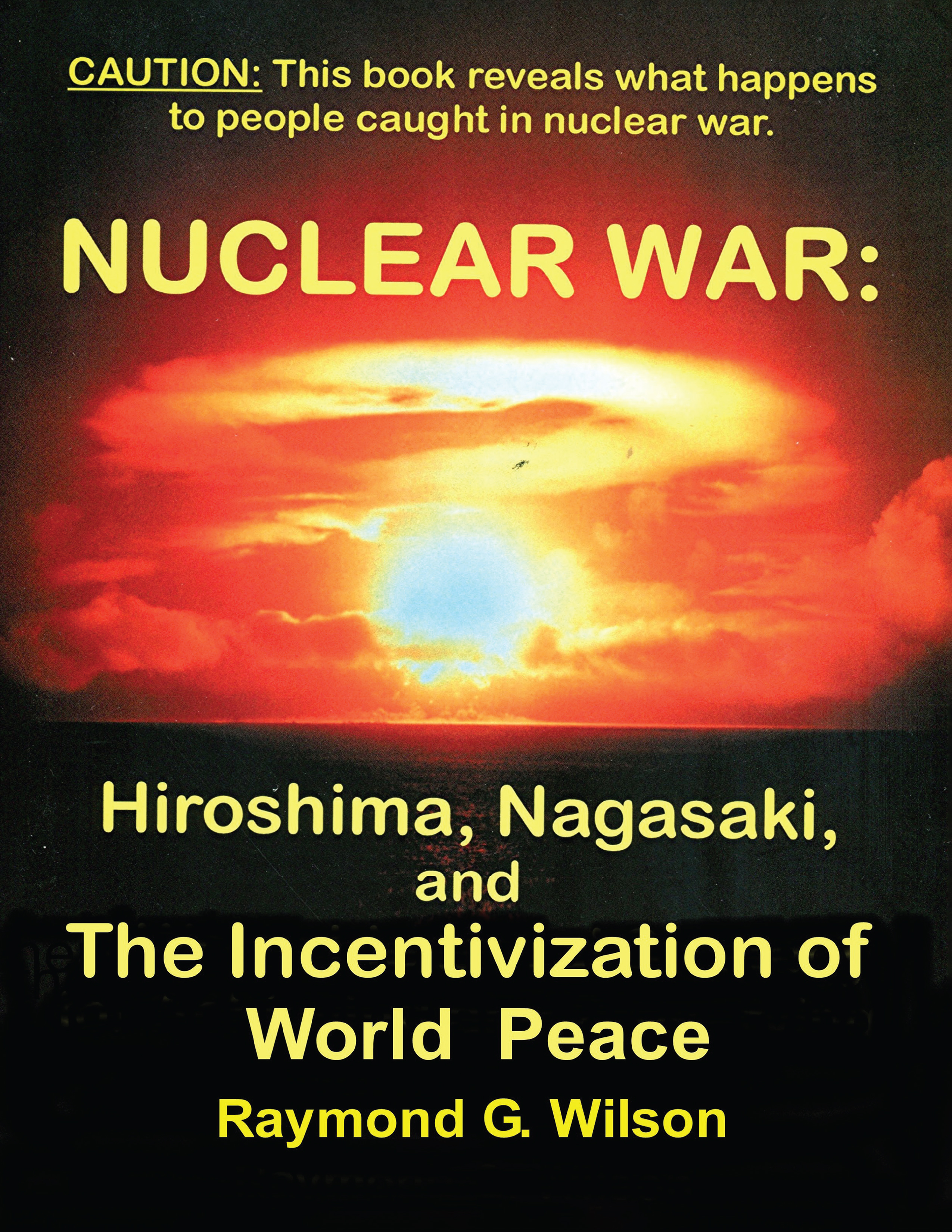
NUCLEAR WAR: HIROSHIMA, NAGASAKI, and THE INCENTIVIZATION OF WORLD PEACE – HARDBACK
Raymond G. Wilson
Format: Hardback
Published Date: June 13, 2026
Pages: 280
ISBN: 979-8-90000-238-5
Book Description
About The Author
Reviews (1)
| Description | My explorations began in 1959, initially, teaching high school physics students how to protect themselves in the event of nuclear “exchanges” with the Soviet Union. (You were out of luck if did not enroll in physics.) Later, this venture continued whenever my physics students at Illinois Wesleyan University encountered nuclear phenomena. When the United States initiated the world’s first |
|---|
R. G. Wilson –
Review of, “The Incentivization of World Peace”
It is a profound irony of our modern age that man’s intellect has outpaced his morality. Having unlocked the very energy that powers the stars, we find ourselves trembling like children before a fire we do not know how to extinguish.
Sitting with this text, “The Incentivization of World Peace” by Dr. Raymond G. Wilson, one finds its resonance quite striking. It is as if Dr. Wilson has looked at the equations of our survival and realized that we are missing a vital constant.
It has long been the conviction that the release of atomic energy has changed everything except our way of thinking. We drift toward unparalleled catastrophe. This book seeks to correct this drift—not merely with the soft language of hope, but with the firm logic of necessity.
We begin where we all must: with the somber lessons of Hiroshima and Nagasaki. These are not merely historical data points; they are the “event horizons” of human cruelty. The tragedies are used as a sobering foundation, proving that our old Newtonian ways of resolving conflict—through the collision of masses and the force of arms—lead only to a state of total entropy. To continue on this path is to ignore the very laws of cause and effect.
What is found most intriguing is Dr. Wilson’s “Incentivization Strategy.” He understands a truth that many physicists miss: that the human world, much like the physical one, is governed by fields of influence. By aligning economic growth and industrial cooperation with the elimination of war, he proposes a new “gravitational pull” toward stability.
If we can make the pursuit of peace as profitable and structurally sound as the pursuit of war, the people and nations of the earth will naturally align themselves toward prosperity rather than destruction. It is a beautiful hypothesis—one that treats peace not as a distant, abstract ghost, but as a tangible, strategic reality.
Dr. Wilson builds upon the concerns that Robert Oppenheimer and Albert Einstein carried in their later years. It is true. They realized too late that knowledge without an ethical framework is a dangerous gift.
This book is a vital contribution for the policymakers and the dreamers alike. It asks the reader to engage in a “thought experiment” of the highest order: Can humanity evolve its systems before it exhausts its time?
Dr. Wilson’s work reminds us that “The world is a dangerous place, not because of those who do evil, but because millions will quietly look on and do nothing, pouring their passion into million-dollar entertainments while ignoring the crises around them.” You are encouraged to study this proposal. After all, imagination is more important than knowledge—for knowledge is limited, whereas the imagination to build a world without war embraces the entire future of our species.
Our survival depends on our ability to cooperate. This book provides the blueprint for that cooperation.